London Finance Forum
On 9 July 2026, the London Finance Forum, jointly organised by the China-Britain Artificial Intelligence Association (CBAIA) and the Oxford Institute for Prospects and Global Development (OPGDI), was successfully held in London. The forum attracted nearly 60 finance, investment and technology professionals from Shanghai and London.
Centred on the theme of ‘Financial Infrastructure, AI and Markets’, the forum featured three keynote presentations focusing respectively on the London Metal Exchange (LME) as a long-established commodity trading system, AI’s systemic reshaping of the financial industry, and frontier applications of AI in quantitative trading and cryptocurrency forecasting. Approaching the subject from the three distinct perspectives of exchange systems, corporate governance and frontline practice, the speakers jointly addressed the same question: what will the industry look like when AI truly enters the core decision-making chain of finance?
The forum was filled to capacity. The audience included both financial-sector practitioners and representatives of businesses exploring AI applications. Discussion was lively, and the interactive sessions proved as engaging as the keynote presentations.
The London Metal Exchange: A Global Pricing Benchmark Built on 148 Years of History
The first presentation, entitled ‘What is the LME?’, was delivered by Ms Lynn Chai of the London School of Economics and Political Science (LSE). One of the world’s oldest and largest base-metals markets, the London Metal Exchange (LME) was established in 1877. Its origins encapsulate the Industrial Revolution itself: at the time, Britain’s consumption of industrial metals was surging, yet the country remained heavily dependent on overseas imports. Copper from Chile and tin from Malaysia often took three months to reach London by sea, creating an urgent need within industry for a means of hedging the risk of price fluctuations during long-distance transportation. This gave rise to the LME’s signature standard three-month contract.
Lynn traced the LME’s development over nearly 150 years: from informal barter-based copper and tin trading among merchants at London’s Royal Exchange in the 16th century, to the LME’s formal establishment in 1877 with an initial focus on copper; from its continued stable operation during both world wars, supporting global industrial supply chains, to the regulatory reforms prompted by the Sumitomo copper affair, which shook the industry in the 1990s; and from Hong Kong Exchanges and Clearing’s £1.388 billion acquisition of the LME in 2012, which formally established a strategic link with Asian commodity markets, to the historic nickel short squeeze of 2022, when the price reached US$100,000 per tonne. The history of the LME is, in many respects, also a history of the evolution of risk and governance in global commodity markets.
Lynn highlighted that the LME now performs four core functions: global pricing, risk management, market transparency and physical delivery. Its average daily trading volume exceeded 757,000 lots in 2025, while more than 450 approved warehouses and 32 delivery locations worldwide support the actual movement of physical metals. This is a key distinction between the LME and purely financial exchanges. She also introduced the LME’s distinctive three-platform trading system: the open-outcry ‘Ring’, in which only Category 1 members may participate and each metal has a five-minute trading session; LMEselect, a highly liquid electronic platform covering all contract types; and the round-the-clock inter-office telephone market spanning Asian and American time zones. Working together, the three platforms generate the ‘official settlement price’ used as a benchmark by mines, smelters and manufacturers worldwide.
Turning to membership, Lynn outlined the complete tiered system from Category 1 Ring-dealing members to Category 5 clients, as well as the principal routes through which international and Chinese institutions participate in the LME. Most Chinese institutions choose to participate indirectly for hedging purposes through Hong Kong subsidiaries, while also complying with the requirements of China’s foreign-exchange and state-owned-assets regulators. She added that the relationship between the LME and the Chinese market is continuing to deepen as China consolidates its position as the world’s largest consumer of industrial metals, AI infrastructure and power-grid construction structurally increase demand for key metals such as copper and silver, and Hong Kong warehouses received approval in 2025. This represents both a continuation of history and the starting point for a new round of opportunities.
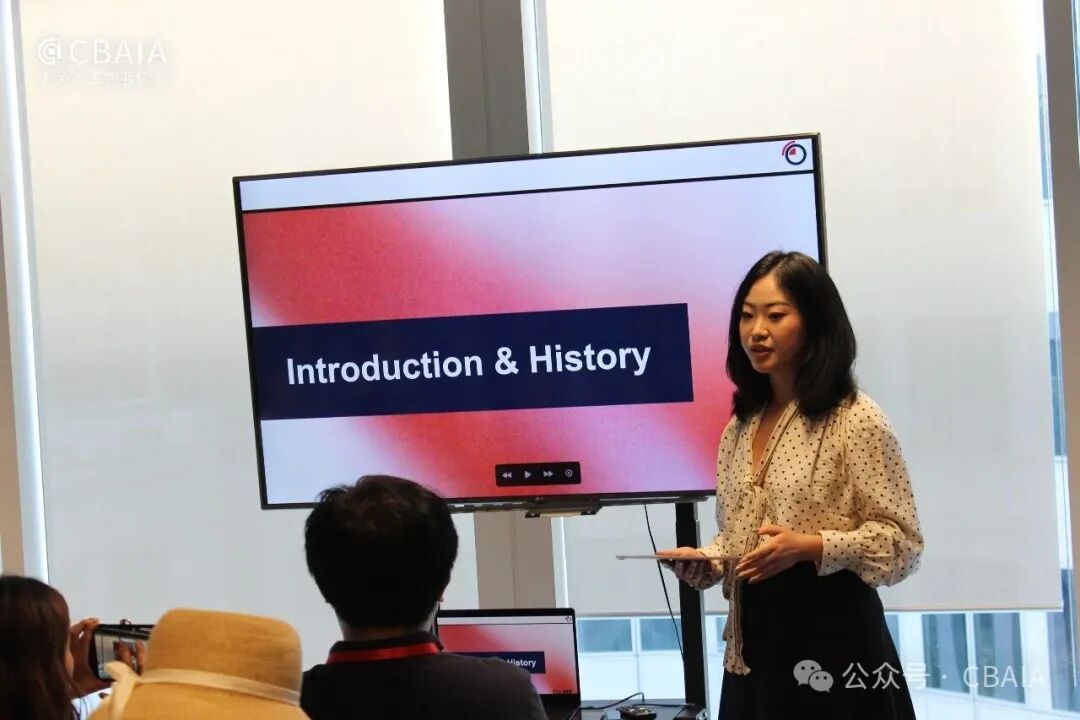
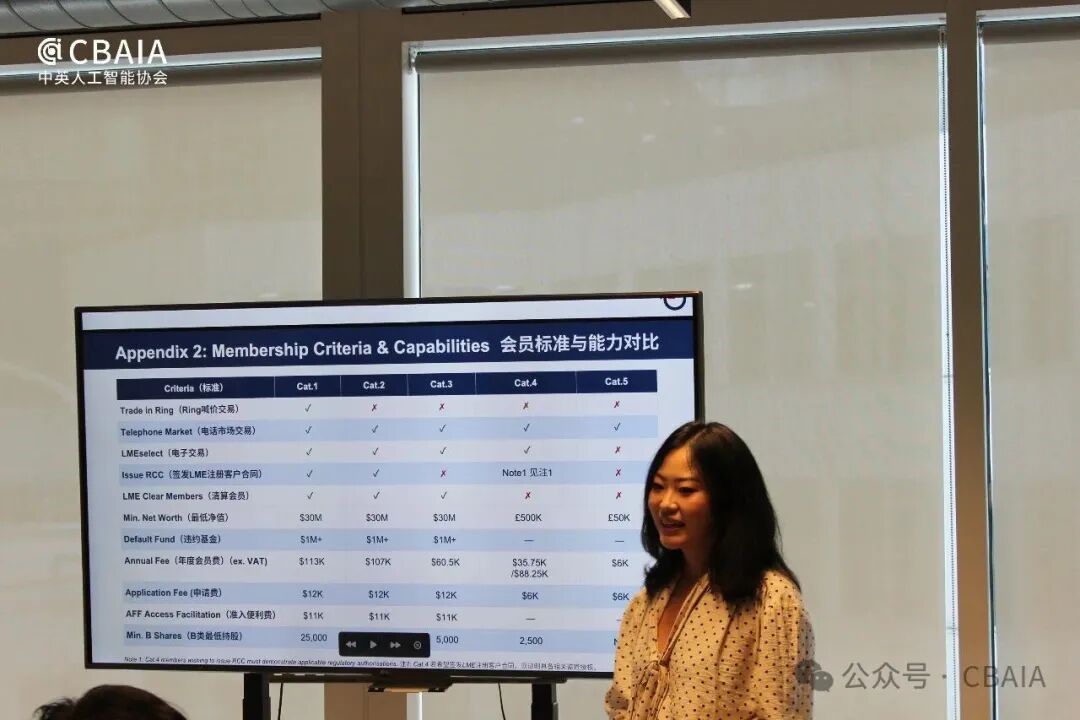
Ms Lynn Chai introduces the LME
The Transformative Impact of AI on Finance: From ‘Can We Use It?’ to ‘How Should We Govern It?’
The second presentation was delivered by Ms Elaine Xu (MSc, CFA, CAIA) under the title ‘The Transformative Impact of AI on the Financial Industry’. Its subtitle clearly defined the scope of the discussion: ‘How artificial intelligence is reshaping investment, risk management, operations and financial services — perspectives from the UK and Europe’. While the first presentation examined a mature trading system tested over more than a century, the second addressed a technology that is still evolving rapidly and which governance frameworks urgently need to catch up with.
Rather than remaining at the level of excitement about what AI can do, Elaine’s presentation moved directly to the central issue financial institutions must confront when applying AI in practice: risk and governance. She introduced ‘The new risk taxonomy created by AI’, explaining that AI risk is inherently multidimensional. In addition to model risk — including poor performance, drift, opaque ‘black-box’ operation, hallucinations and weak validation — there are data risks involving stale, incomplete, biased or unauthorised data and the leakage of confidential information; conduct risks involving inappropriate outputs, misleading commentary and a blurred boundary between advice and guidance; operational-resilience risks involving workflow dependency, cyber exposure, system outages and inadequate contingency planning; supplier-concentration risks arising from excessive dependence on a small number of model or cloud-service providers and ‘black-box’ tools; and systemic risks including highly correlated models, crowded signals, procyclical behaviour and automation bias.
On this basis, Elaine set out a six-principle control framework. She emphasised that the strength of controls should be proportionate to materiality and the potential impact on clients and investments, with human-in-the-loop oversight, explainability and auditability at its core. First, classify the use case and its materiality — whether administrative, analytical, investment decision support, client-facing or automated decision-making. Second, establish clear ownership and define the human-in-the-loop role, including business owners, model owners, data owners, and risk and compliance oversight. Third, ensure that outputs are explainable and supported by evidence through source citations, prompt and output logs, authoritative data sources and version control. Fourth, manage data risk by respecting access controls, data classification and privacy requirements. Fifth, manage model and supplier risk through due diligence, service-level agreements, resilience testing and exit plans. Sixth, genuinely incorporate AI into existing governance systems through model identification, independent validation and model-risk mitigation measures. Citing Article 14 of the EU Artificial Intelligence Act and a Bank of England/FCA survey, she noted that regulators are similarly focused on the importance of human oversight and explainability.
She also presented an ‘AI-assisted governance documentation workflow’. Inputs include meeting minutes, agendas, documents, attendance information, and market and risk reports. AI then produces summaries, key decisions, points of challenge, and lists of owners and actions. This must be followed by human approval: records become effective only after confirmation by the chair and the relevant owners. Finally, all versions, source materials, revisions and follow-up actions must form a complete audit trail. She summarised the principle in one sentence: ‘AI can draft the record, but the governance owner must approve the record.’
During the subsequent question-and-answer session, Elaine added her observations on the current state of AI adoption in the UK financial industry. Because financial services are highly regulated, firms are generally very cautious when adopting AI technology. Breadth of use, depth of use and scalability are three separate dimensions. The most widespread current applications are automated production of meeting minutes, which still requires human review; retrieval-augmented generation (RAG) for locating information across very large document collections; and the generation of commentary for portfolio attribution. In model selection, banks are more inclined to use open-source models deployed on their own servers or solutions offering a high level of security. Embedded workplace tools such as Microsoft Copilot 365 have achieved relatively high adoption, while an increasing number of collaborations with leading large-model providers are also being explored. Where client data is involved, however, firms generally adhere to the principle that internal data must remain within the enterprise layer and must never be shared with public large models, with a growing preference for on-premises deployment.
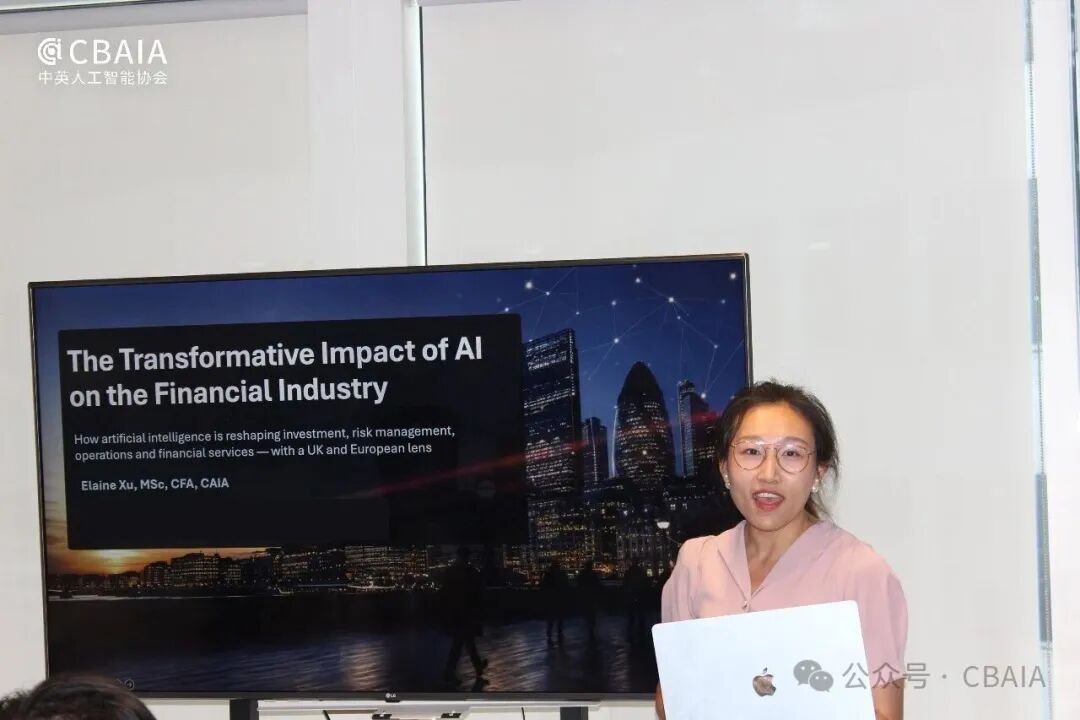
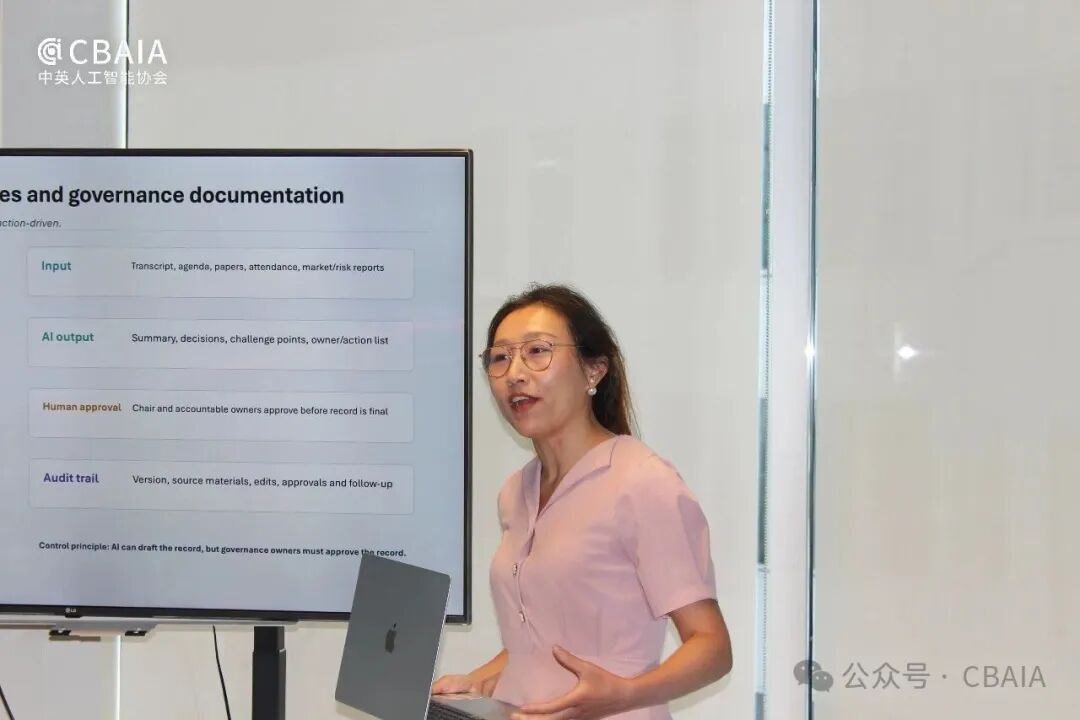
Ms Elaine Xu presents ‘The Transformative Impact of AI on the Financial Industry’
Forecasting Cryptocurrency: As a Distribution, Not a Guess
The third presentation was delivered by Dr Simon Wang, Founder & CEO of SimicX, under the title ‘Forecasting Crypto — As a Distribution, Not a Guess’. At the outset, Simon explained that this was not intended as a conventional closing presentation, but more as an in-depth interaction with the audience. The first two speakers had already examined exchange systems and governance frameworks in considerable depth; drawing on more than a decade of experience in quantitative trading, he wanted to discuss how AI is specifically changing his own work.
Simon began by asking the audience two questions. Had anyone never used AI at all? No one raised a hand. Did anyone believe there was a high probability that their current job, or the job they hoped to pursue, would be replaced by AI? Three or four audience members raised their hands. This brief interaction set the scene for the discussion that followed.
Simon noted that, 20 or 30 years ago, quantitative traders were described as ‘The Rocket Scientists on Wall Street’. Practitioners often held doctorates in mathematics or physics, and some had even worked in aerospace engineering. Drawing on strong mathematical foundations, they translated market patterns into mathematical models and used them to forecast market movements. Today, this field, which traditionally depended heavily on exceptional talent and many years of accumulated experience, is being redefined by AI.
Using the cryptocurrency market as an example, he explained the logic behind this transition in accessible terms. There are two ways to forecast a future price. One is to ‘guess’ a specific figure — for example, whether Bitcoin will be worth US$60,000 or US$70,000 tomorrow. The other, which is mathematically more effective, is to forecast a distribution: the respective probabilities that the price will rise or fall by a given percentage the next day. On the basis of such a distribution, a method known as the Continuous Ranked Probability Score (CRPS) can be used to score the forecast cumulative distribution function (CDF), with a lower score indicating a more accurate forecast.
The key significance of this transition is that, once forecast accuracy can be quantified as a specific number, the next step is to give AI the single objective of making that number smaller and allow it to optimise autonomously. AI can continually test new strategies and mathematical models, with the sole task of steadily reducing the score. Simon shared the results of a practical project undertaken by his company: in a relatively simple Harness environment, AI has already reduced the CRPS to 0.0005, while forecast accuracy has reached approximately 55% in some circumstances. In a traditional quantitative-trading context, this level of performance might take a leading hedge-fund team five or even ten years to achieve, whereas AI may require only three to six weeks.
Simon also spoke candidly about his concerns. If AI can perform this type of forecasting and strategy generation efficiently and at scale, the consequences will be fundamental. People engage in quantitative trading with specific purposes, such as earning a living or generating returns for clients, whereas AI itself has no purpose. It may make markets fully efficient, but it may also cause markets to lose their original reason for existing, because speculation itself has no meaning for AI. He added that the technology remains at an early stage and that questions about overfitting and whether AI-generated strategies have genuine financial-fundamental meaning remain contested. In his view, however, this is largely a matter of time: once AI is adopted at scale in quantitative trading, the meaning of trading itself may be redefined.
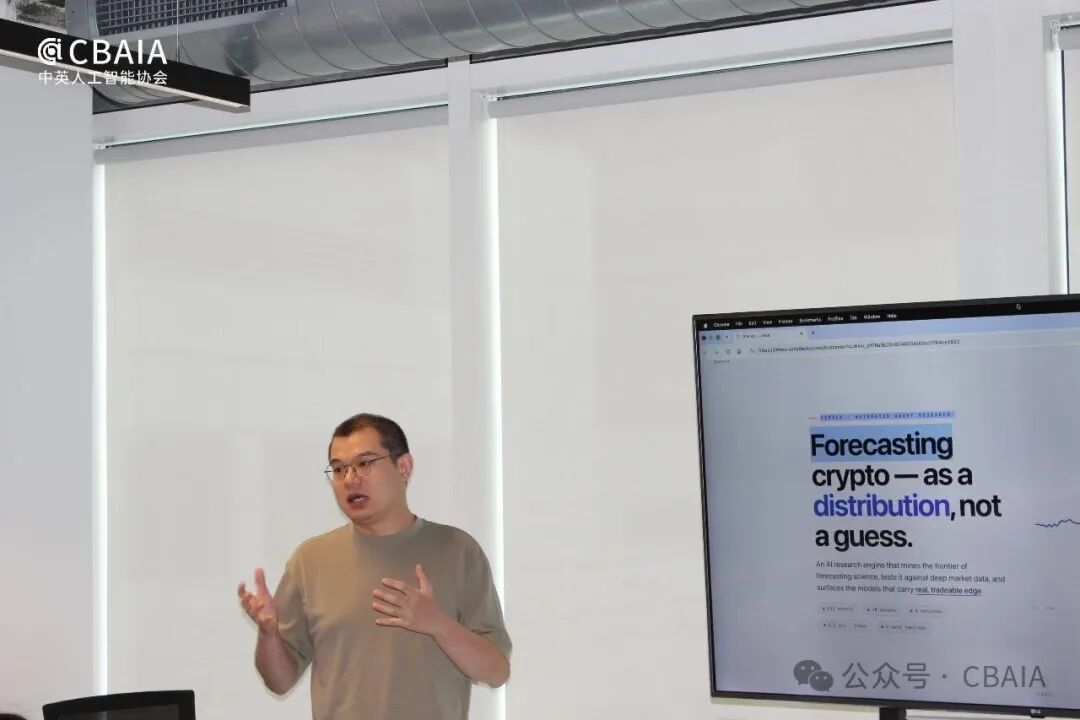
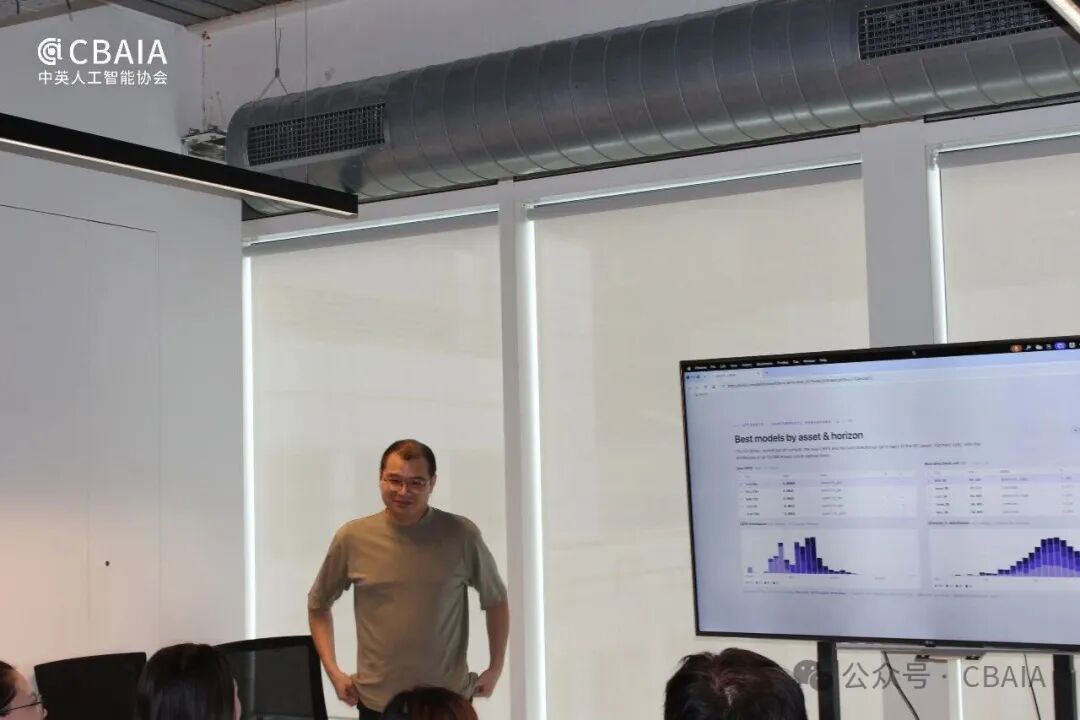
Dr Simon Wang presents ‘Forecasting Crypto — As a Distribution, Not a Guess’
Q&A: Strategy Lifecycles, Market Efficiency and the Reality of Enterprise AI Adoption
Following the three presentations, the forum moved into a lively open question-and-answer session in which all three speakers took part.
One audience member asked whether a substantial increase in the efficiency of developing trading strategies through AI would mean that strategy lifecycles become progressively shorter and market information advantages are rapidly eliminated. Simon responded that the ‘shelf life’ of strategies would inevitably shorten, because anyone with access to the relevant tools would be able to do similar work, and this capability operates across industries, fields and market cycles. During the early stages, information asymmetries might instead increase because a ‘human market’ and a ‘human plus AI agent market’ would coexist and disagree with one another. However, as market participation gradually evolves towards a high proportion of ‘agent-versus-agent’ interactions, markets will become highly efficient and transaction costs will fall accordingly.
Addressing whether AI might create new forms of market gaming, Simon noted that both human and AI strategies are, in essence, mathematical models and can therefore be attacked. This is particularly relevant on unregulated cryptocurrency exchanges, where strategies based on order-book depth may be disrupted through the malicious creation of false market depth, and humans often identify such problems more slowly than AI.
Elaine also expanded on her overall assessment of enterprise AI adoption in the UK. Systematic investment institutions such as the hedge fund in which Simon works are often among the earliest adopters of AI technology, but they represent only one part of the industry rather than the whole picture. Broader adoption across the sector remains concentrated in relatively fault-tolerant, clearly bounded applications such as meeting minutes, document retrieval and attribution commentary. Firms remain cautious about applications involving client data and critical decision-making, consistent with the governance framework and explainability requirements she had outlined earlier.



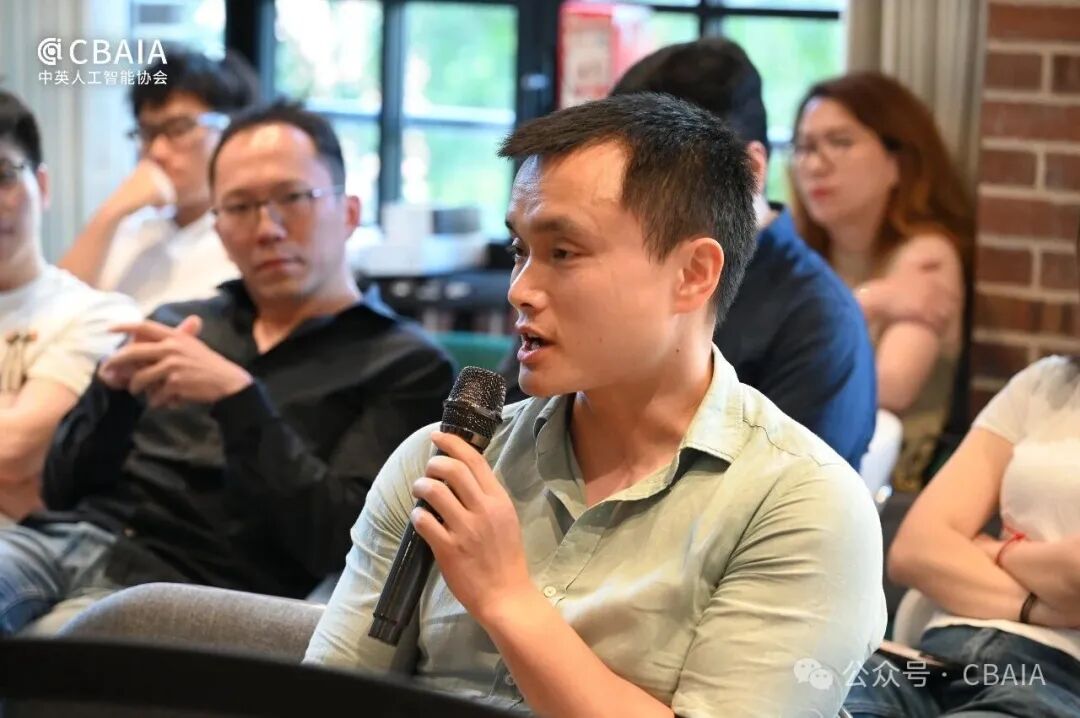
An insightful question from SUFE
Conclusion
From the 148-year history of the London Metal Exchange, to a six-principle framework seeking to define the boundaries of financial governance in the AI era, and then to a quantitative-trading practitioner’s candid account of his genuine concerns about his own livelihood, the three presentations at the London Finance Forum formed a coherent narrative. In finance, AI is neither a distant concept nor an answer that can be achieved overnight. It is an ongoing evolution in which efficiency, risk and trust are deeply intertwined.
From different perspectives, the three speakers addressed the same question: when forecasting, decision-making and execution can all be entrusted to AI, what role should people play within the system? There may be no single answer, but the atmosphere in the room — attentive listening, detailed questioning and candid exchange — itself demonstrated that this is a discussion worth continuing.
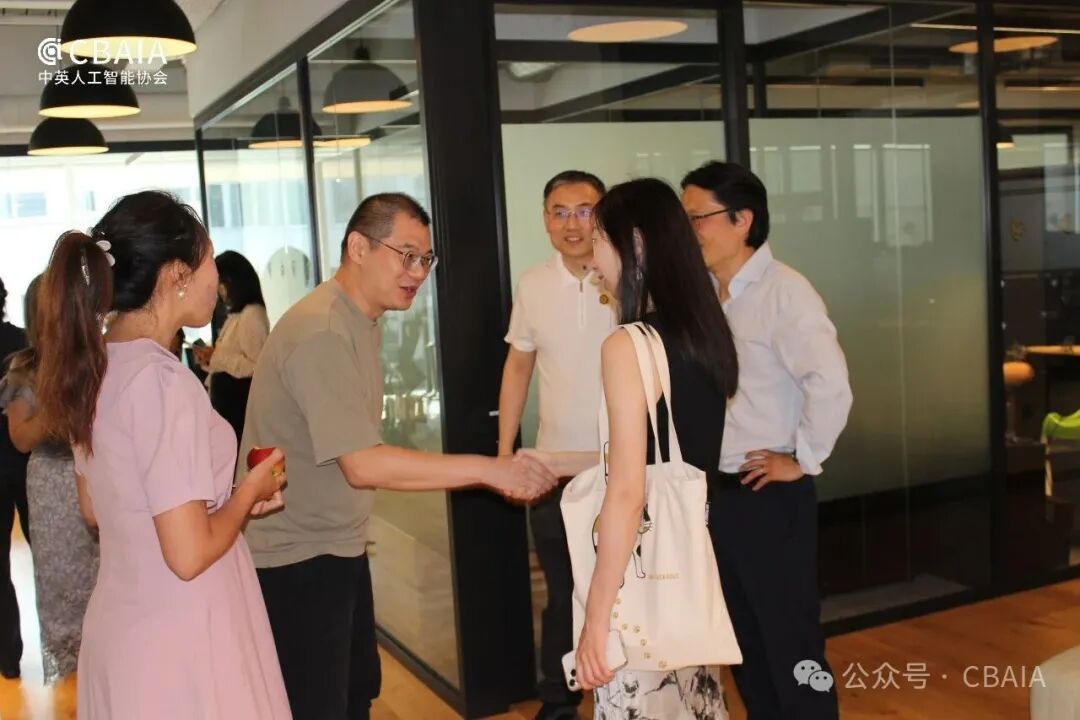
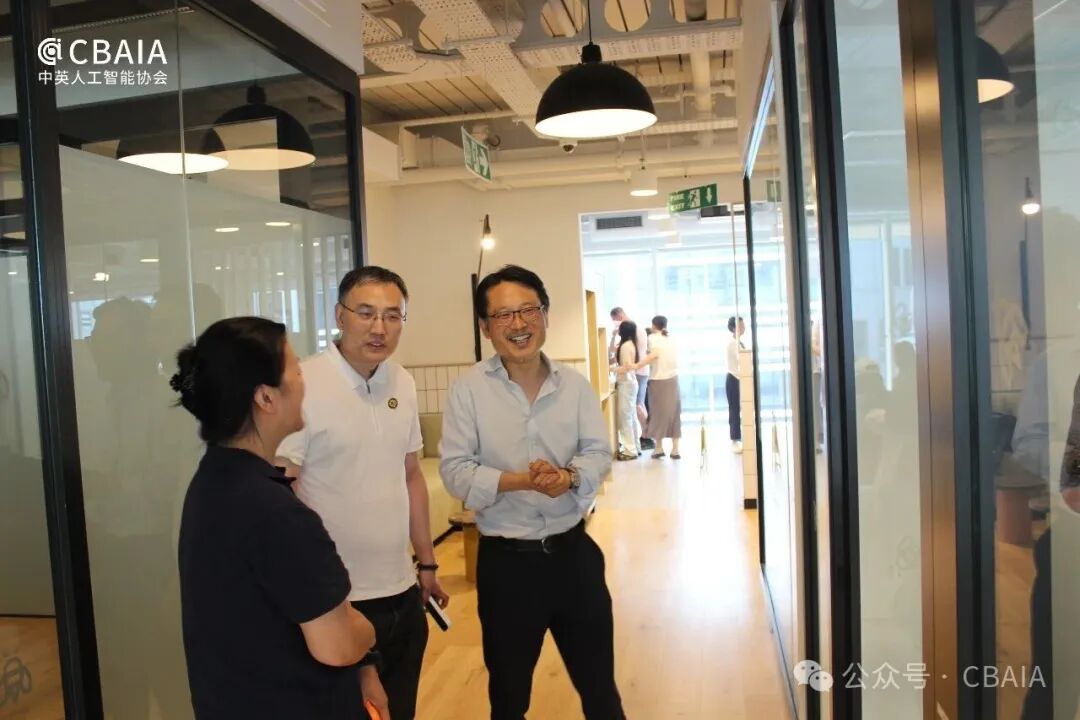

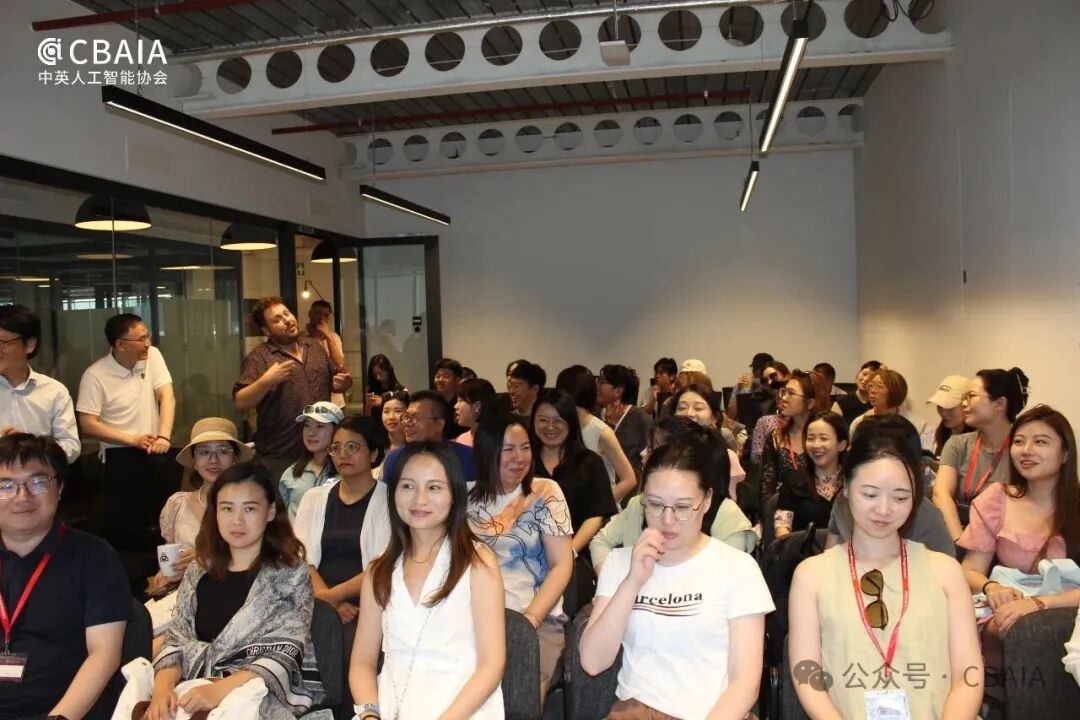
Highlights from the event
Planning | Tengfei Yin, Zhenhai Li
Delivery | Tengfei Yin, Lynn Chai, Julia, Zhenhai Li
Moderator | Zhenhai Li
Photography | Tengfei Yin
Author | Tengfei Yin
Editor | Tengfei Yin
Review | Zhenhai Li